Energy
Protecting a substation from UAVs: insulators, transformers and electromagnetic compatibility
A substation is a compact site where the cost of a mistake is high. Insulators, transformers and open switchgear are vulnerable, while powerful jamming can affect relay protection and communications. Design precision matters here more than anywhere.

Contents
What is being attacked at substations?Why is RF jamming dangerous?Passive protectionDetection and identificationLaser and interception: when acceptableAttack scenario and timelineNon-stop projectA substation differs from a plant and oil depot due to the density of critical equipment in a small area. One drone can damage an insulator, damage a transformer, or create an emergency situation. At the same time, systems that are sensitive to interference operate nearby.
What is being attacked at substations?
- Insulators and support structures for outdoor switchgear.
- Transformers and oil production.
- Busbars, disconnectors and cable entries.
- Communication systems, telemetry and relay protection.
Why is RF jamming dangerous?
A powerful jammer can affect relay protection, GPS synchronization, SCADA and communications. This is unacceptable at a substation: a false operation of the protection or loss of synchronization can lead to an accident. Therefore, REB is used only after electromagnetic compatibility calculations and in limited sectors.
Passive protection
Enclosures, shields and protective structures reduce the likelihood of damage to insulators and transformers. They do not interfere and operate without power, but do not stop reconnaissance. Passive protection is a complement to detection, not a replacement.
Detection and identification
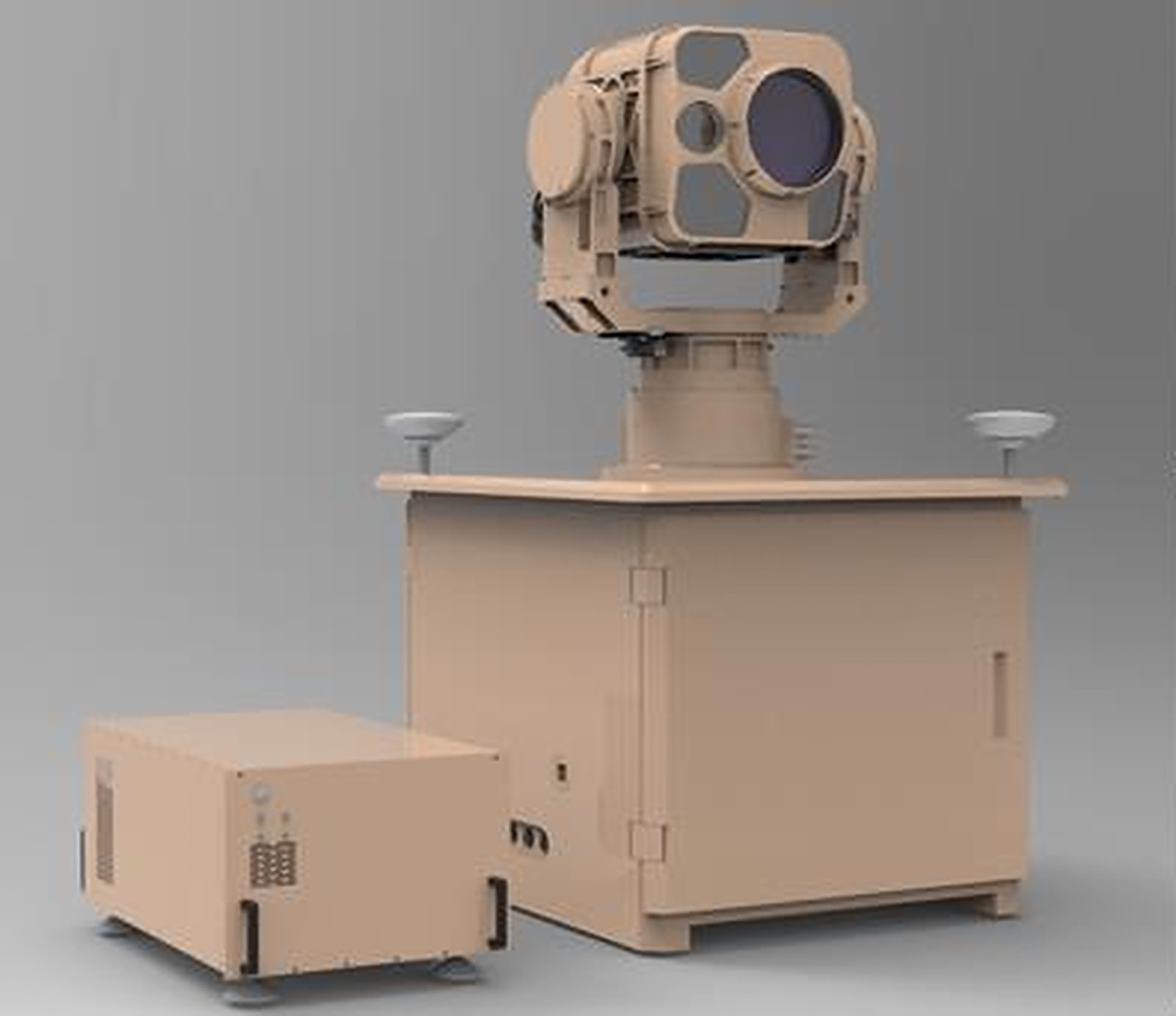
A small drone in the background of a substation is a difficult target: a lot of metal, reflections and heat sources. A combination of radar and optics is needed, as well as video confirmation. The detection range must be sufficient to allow the operator time to make a decision.
Laser and interception: when acceptable
Laser exposure does not create fragments and can be used in permitted sectors. Kinetic interception is limited to debris impact areas. In any case, the rules of application are agreed upon with the owner of the object and the relevant services.
Attack scenario and timeline
Reconnaissance removes exposed switchgear, then possible FPV strike on insulators. The approach height is 20–100 m, the approach time from 2 km is about a minute. The system must detect the target before approach and confirm it with optics.
Non-stop project
- Survey and 3D model without equipment removal.
- Installation of supports and cable routes in technological windows.
- First detection, then means of influence.
- Commissioning on real scenarios.
- Operator training and recording of false alarms.
